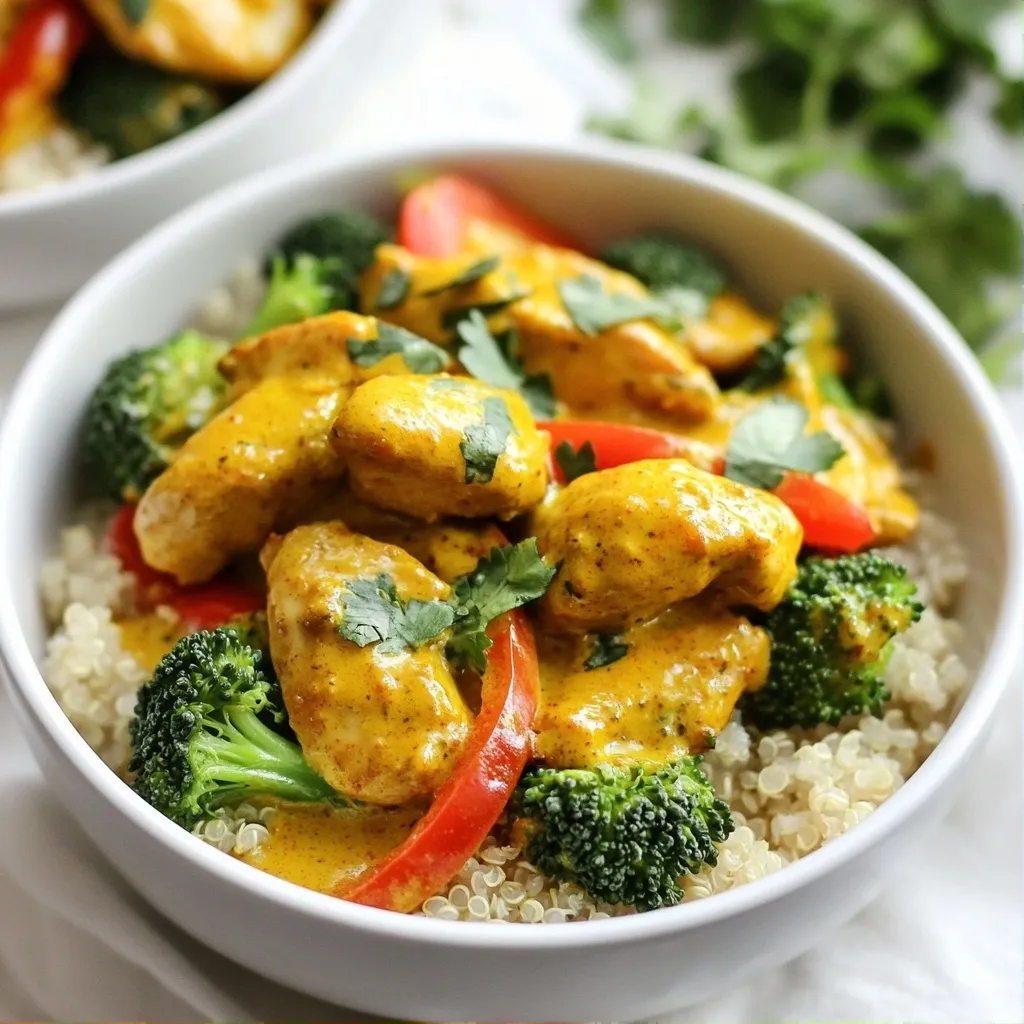
If you're craving a delicious and healthy meal, you’ve come to the right place. This Coconut Curry High Protein Chicken Skillet recipe is packed with flavor and simple to make. You'll enjoy tender chicken, rich coconut milk, and fresh veggies—all in one pan. Whether you're short on time or looking to impress, this dish fits the bill. Let’s dive into the ingredients and get cooking!
Why I Love This Recipe
- Flavorful Fusion: This dish combines the richness of coconut milk with the boldness of red curry paste, creating a delightful flavor profile that will tantalize your taste buds.
- High Protein Boost: With lean chicken breast as the star ingredient, this recipe provides a substantial protein boost, making it perfect for those looking to increase their protein intake.
- Quick and Easy: Ready in just 30 minutes, this skillet meal is perfect for busy weeknights when you want something delicious without spending hours in the kitchen.
- Customizable Veggies: Feel free to swap in your favorite vegetables or whatever you have on hand, making this dish adaptable to your personal taste and dietary needs.
Ingredients
List of Ingredients
- 1 lb boneless, skinless chicken breast
- 1 can coconut milk
- 2 tablespoons red curry paste
- 1 tablespoon ginger, minced
- 2 cloves garlic, minced
- 1 bell pepper, sliced (any color)
- 1 cup broccoli florets
- 1 tablespoon soy sauce (or tamari for gluten-free)
- 1 tablespoon olive oil
- 1 teaspoon turmeric powder
- Salt and pepper to taste
- Fresh cilantro for garnish
- Cooked quinoa or brown rice for serving
The ingredients in this coconut curry chicken skillet are simple yet flavorful. The one pound of boneless, skinless chicken breast provides a great protein base. I like to cut the chicken into bite-sized pieces for quick cooking.
You will need one can of coconut milk. This creamy milk gives the dish a rich flavor and a lovely texture. The red curry paste adds a warm spice that elevates the dish. I use two tablespoons for a nice kick.
Fresh ingredients are key. I add ginger and garlic for their aromatic qualities. They wake up the dish and create a fragrant base. A sliced bell pepper and cup of broccoli add color and crunch.
The soy sauce brings out the umami flavor, while olive oil helps in cooking. Turmeric adds a slight earthiness and a golden hue. Don’t forget to season with salt and pepper for balance.
Finally, garnish with fresh cilantro for a burst of freshness. Serve the curry over cooked quinoa or brown rice for a wholesome meal. This combination makes the dish both nutritious and delicious.
Step-by-Step Instructions
Preparation of Chicken
Start by cutting the boneless, skinless chicken breast into bite-sized pieces. Season the chicken with salt, pepper, and turmeric powder. Using boneless and skinless chicken makes cooking faster. It also keeps the meat tender and juicy.
Cooking Aromatics
In a large skillet, heat olive oil over medium-high heat. Add minced garlic and ginger to the hot oil. Sauté for about one minute until you smell the aroma. This step adds depth to the dish. Use olive oil for its light flavor and health benefits.
Cooking Chicken and Adding Vegetables
Now, add the seasoned chicken pieces to the skillet. Cook for about five to seven minutes. Make sure to stir often until the chicken turns golden brown. Next, stir in the red curry paste, coating the chicken well. Then, add sliced bell pepper and broccoli florets. Sauté for an additional three to four minutes until the veggies soften.
Mixing in Coconut Milk
Pour in the coconut milk and soy sauce. Stir well to combine everything. Bring the mixture to a gentle simmer. Let it cook for about five to ten minutes. This simmering time helps the flavors blend and the sauce thicken slightly. Aim for a creamy texture that clings to the chicken.
Final Touches
After simmering, taste your curry. Adjust the seasoning if needed by adding more salt, pepper, or curry paste. For serving, spoon the coconut curry chicken over cooked quinoa or brown rice. Garnish the dish with freshly chopped cilantro for a pop of color. Serve in deep bowls and add lime wedges for an extra zing.
Tips & Tricks
How to Enhance Flavor
- Additional spices to try: You can add cumin, coriander, or even a pinch of cinnamon. These spices create a warm backdrop and deepen the flavor. Also, consider a dash of lime juice for a fresh zing.
- Balancing heat and sweetness: If your curry feels too spicy, add a bit of brown sugar or honey. This sweetness will help balance the heat from the red curry paste. Always taste as you go to find the perfect blend for your palate.
Cooking Techniques
- Recommended skillet types for best results: Use a heavy-bottomed skillet or a non-stick pan. These types distribute heat evenly. This helps brown the chicken well without burning.
- Cooking tips for moist chicken: Avoid overcooking the chicken. Cook it just until it is no longer pink. This keeps it juicy. You can also marinate the chicken in coconut milk for extra flavor and moisture before cooking.
Meal Prep Suggestions
- Preparing ingredients in advance: Chop your vegetables and season the chicken ahead of time. Store them in the fridge. This way, you can whip up the dish quickly on a busy day.
- Storing leftovers properly: Place any leftover coconut curry in an airtight container. It will stay fresh in the fridge for about 3 days. You can also freeze it for up to 2 months, making it easy to enjoy later.
Pro Tips
- Marinate for More Flavor: For an even richer flavor, consider marinating the chicken in the coconut milk and curry paste for at least 30 minutes before cooking.
- Vegetable Variations: Feel free to swap in your favorite vegetables like snap peas, carrots, or zucchini for a personalized twist on the dish.
- Adjusting Spice Levels: If you prefer a milder curry, start with half the amount of red curry paste and gradually add more to taste.
- Leftover Magic: This curry tastes even better the next day! Store leftovers in the refrigerator for a quick and delicious meal.
Variations
Protein Alternatives
You can switch chicken for shrimp, tofu, or tempeh. Shrimp cooks fast and adds a nice flavor. Use firm tofu for a plant-based option. Tempeh has a nutty taste and is packed with protein. Each option gives a new twist to the dish.
Vegetable Swaps
Feel free to try other veggies like snap peas, carrots, or zucchini. Seasonal vegetables can also change the taste. In spring, use asparagus or peas. In fall, try adding pumpkin or sweet potatoes. Each swap brings fresh flavors.
Adding Different Grains
If you want to change grains, consider farro or millet. Both provide unique textures. For gluten-free options, use rice or quinoa. They soak up the curry’s flavor and create a hearty meal. Experiment with different grains to find your favorite!
Storage Info
Storing Leftovers
To keep your coconut curry chicken fresh, start by placing it in an airtight container. This helps prevent odors from other foods in your fridge. Make sure to let it cool down for about 30 minutes before sealing it up. Refrigerate it within two hours of cooking.
When you want to reheat, use a skillet over medium heat. Add a splash of water or coconut milk to keep it moist. Stir it often until it's warmed through. You can also use a microwave, but cover the dish to trap steam. This keeps the chicken juicy.
Freezing Tips
Freezing your coconut curry chicken is easy. First, let it cool completely. Then, portion it into freezer-safe bags or containers. Remove as much air as you can before sealing. Label each bag with the date.
To thaw, simply move it to the fridge overnight. If you’re in a hurry, run warm water over the sealed bag. Reheat it in a skillet or microwave. If you use a microwave, stir halfway through to heat evenly.
Shelf Life Information
In the fridge, your coconut curry chicken stays fresh for about 3 to 4 days. In the freezer, it can last for up to 3 months. Always check for any signs of spoilage before eating. If it smells off or looks strange, it's best to toss it.
FAQs
Can I make this coconut curry dish dairy-free?
Yes, you can easily make this dish dairy-free. Coconut milk is a great dairy alternative. It adds creaminess and richness without any dairy. Plus, it brings a lovely coconut flavor. You can also use other plant-based milks, but coconut milk works best for this recipe. It keeps the taste authentic and delicious.
What can I do if it’s too spicy?
If your dish is too spicy, you have a few options. First, add a bit of sugar or honey to balance the heat. Sweetness helps to tone down spiciness. You can also add more coconut milk to dilute the spice. This will make the dish creamier and less hot. Lastly, serve it with rice or quinoa to help cool it down.
How can I increase the protein content of this dish?
To boost protein in this dish, consider adding more chicken or using beans. Chickpeas or lentils work well and are tasty. You can also serve this curry with a side of edamame or top it with nuts like cashews for extra protein. If you want a hearty meal, serve it with a side of Greek yogurt. It adds protein and makes the dish even creamier.
In this blog post, we explored how to make a delicious coconut curry chicken. We went through the ingredients, preparation steps, tips for flavor, and even variations to suit your taste. Remember, cooking is about having fun and making it your own. Use this guide to create a dish that fits your needs. Enjoy your cooking, and don't hesitate to experiment with flavors and ingredients. Happy cooking!